Posted By Tam Andersen, Farmer
August 19, 2025
Farming, especially growing vegetables for a living, requires knowledge of every stage of crop production. From seed starting to organic fertilization, pest management, regenerative agriculture practices, and knowledge of how to prepare, cook and store these veggies.
There’s a lifetime of learning and a lot to know.
Today’s small-scale farmers carry the torch of the back-to-the-land. Our work is about more than food: it’s about ensuring our food future can be local, and isn’t left solely in the hands of corporations. Now more than ever, we need people willing to take on the challenges, and preserve farming as a way of life. The artisanal knowledge of how to farm on a human scale is a legacy worth nurturing, and passing on to the next generation!
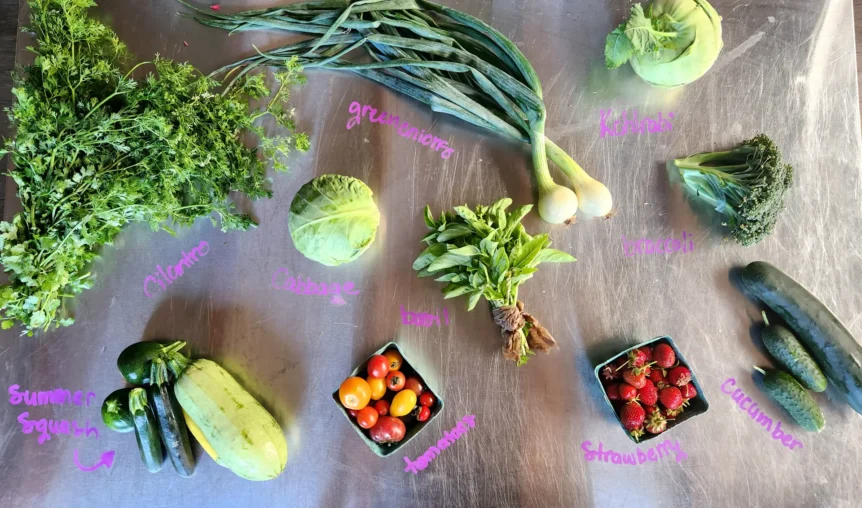
On our farm, it’s about sharing this legacy. Summer isn’t just about sunshine and harvest—it’s a symphony of planning, planting, and people. As a farmer – I am the horticulturalist and head vegetable gardener. I recently sat down with my daughter, Laurel, who is our Community Supported Agriculture weekly food basket manager, our farm Chef, Amy, and Gilbert – lead of our harvest team, to map out the menu for Open Farm Days and prepare for the fall bounty. What followed was a lively, two-hour brainstorm that started with beans and ended with zucchini—and revealed just how much heart goes into every bite we serve. These are the vegetable crops we chatted about to share knowledge for next season!
Heirloom Tomatoes: Flavor First
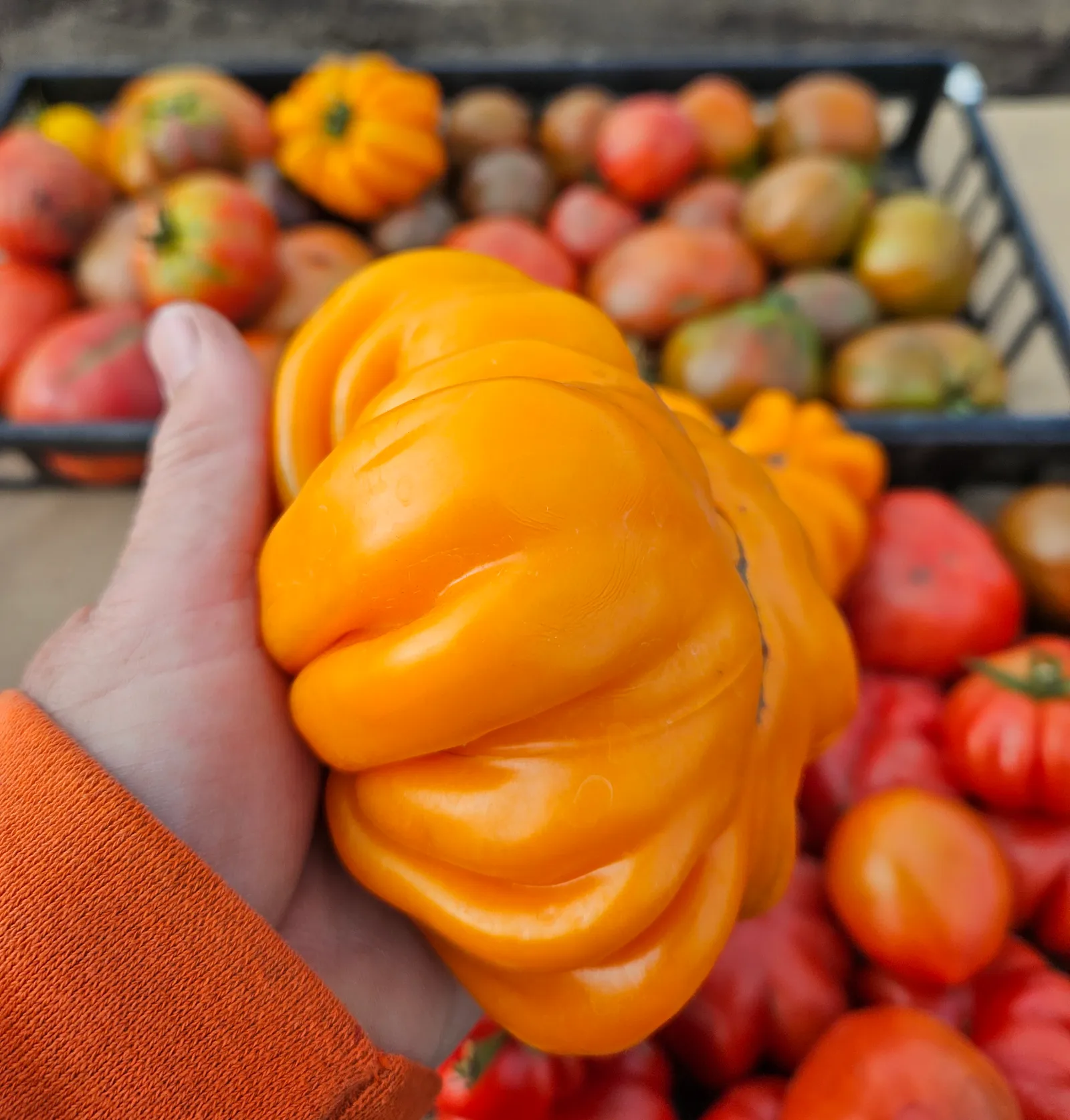
Early Season Heirloom Tomatoes
Heirloom tomatoes and first in the season – because we start them early – in February in our greenhouses. We grow heirlooms for their unmatched flavor—perfect for sauces, salads, and chef creations. But timing is everything. Ripe tomatoes don’t store well, so we harvest only what we can use or sell. It’s a delicate dance of supply, demand, and deliciousness.
Local Berries and Apples: The Sweet Surprise of Summer

A handful of delicious Prairie Gardens u-pick strawberries
This season, fruit has been the unexpected star of our farm-to-table journey. It began with our own strawberries—bright, juicy, and full of early summer promise. From there, we reached out to neighboring farms to source haskaps, saskatoons, and sour cherries, each one showcasing the richness of our region’s local fruit growers. These collaborations not only deepen our community ties but also highlight the diversity of what grows right here in Alberta.
And the season’s not over yet. As we move into fall, we’ll round things out with a delicious array of apples and apple-crabs—tart, crisp, and perfect for pies, preserves, or just fresh off the tree. It’s a reminder that fruit, often overlooked in vegetable-centric CSA planning, brings its own kind of magic to the table.
Beans: Labor of Love
Beans are a staple, but they demand serious picking power. Yellow beans are easier to harvest, but green ones yield more. Purple beans? Fun and tasty, but they turn green when cooked—so we’ll mix them for color and flavor. Flat pod varieties like Dragon’s Tongue are delicious but arrive too late for our summer dinners.
Broccoli: Familiar, Yet Full of Possibility
Broccoli is a crowd-pleaser, and a winter go-to for most families, but folks are always amazed at how good it tastes picked fresh. We’re spicing things up with purple heads and mini broccolini. It’s a versatile veggie that bridges comfort and creativity—perfect for CSA boxes and farm dinners alike.
Cucumbers: Crisp, Versatile, and Season-Extendable
Cucumbers are a refreshing staple, whether you’re slicing them for salads or pickling them for pantry treasures. We grow both slicers and picklers, and thanks to greenhouse protection, we can extend their season beyond the typical summer window. This means more crunch, more flavor, and more flexibility for our CSA members and farm dinners. With careful planning, cucumbers can be one of the most rewarding crops—both fresh and preserved.
Brussels Sprouts: A Tender Surprise
Ever heard of Brussels Sprout Rapini? It’s the tender top of the plant, harvested just before the side sprouts develop. Available for only a week in early September, it’s a fleeting delicacy with a great story—and a great flavor. The Sprouts are harvested a month to six weeks after the rapini is harvested – with these healthy delicacies storing well at subzero temperatures for winter tables.
Cabbage: The Unsung Hero
Charred cabbage has become a star on the plate. Easy to grow and great for winter storage, especially the deep green savoy, cabbage connects us to traditional food systems while offering modern culinary appeal.
Sweet Corn: A Fall Favorite with New Challenges

Tam Andersen, Farmer at Prairie Gardens Holds Sweet Corn Grown on the Farm
Sweet corn, once a rarity north of Edmonton due to cool summers, has become a seasonal highlight—thanks to shifting climates and warmer growing conditions. But with this success comes complexity. The rise of large-scale silage corn operations around us has changed the landscape, bringing both opportunity and new challenges. Warmer summers mean more pests to manage. Still, it’s worth every effort. Nothing compares to the flavor of sweet corn picked fresh from the field—its sugars still intact, its kernels bursting with late-summer sweetness. It’s a true harbinger of fall, and a reminder of how our food system is evolving in real time.
Leeks, Onions, & Winter Squash: Cold-Weather Champions
Leeks, onions and winter squash are storage-friendly and versatile—ideal for holiday meals and CSA boxes. Tromboncini squash, with its dual use as summer and winter squash, is a favorite for its flavor and functionality. We’ve become famous for growing Blue Pumpkins (Kabocha) at the farm. They taste and look similar in many ways to sweet potato on the plate!
Carrots & Beets: Patience and Planning
Carrots are our most tricky crop to grow without irrigation or spring rain. Fall seeding with snowmelt has proven successful, and although we’ve seeded tens of thousands of seeds this season, we’ve only had success with one row (which was fall seeded last year.) Beets need the spring rain too, and are a cool season crop – which makes them equally tricky to grow. Summer seedings do not work.
Zucchini: Green, Gold, and Gourmet
We’re leaning into green zucchini this year, especially the flavorful cousa and striped varieties. Tromboncini also shines here, offering density and versatility from summer grilling to winter baking. The transplanted crop has outperformed the seeded crop, so starting seedlings in the greenhouses and getting them transplanted into the fields is the way to go!
After all the crop talk, one thing is clear: farm-to-table isn’t just a trend—it’s a commitment. It’s about feeding our community with intention, honoring the land’s rhythm, and celebrating the flavors that grow best right here in Alberta. Every vegetable tells a story, and every meal is a chapter in our shared journey.
The Lessons Learned for a Farm-to-Table system
- Availability of labor for both harvesting and prepping
- Timing, timing, timing: peak crop harvests, peak visitor seasons, and peak staffing
- Understand how a particular crop performs both in the field and in the kitchen
- Advance notice to the chefs on when crops will be ready to harvest
- Give each vegetable a chance to shine, especially those with educational value and a story
- Know consumer preferences and need to be flexible to try new things.
- Build strong relationships with other farms to strengthen the whole food system.
- Grow what farmers enjoy growing and what chefs enjoy preparing.