Reflections on food, farming, and place inspired by Tam Andersen’s keynote at the Taste of Place Summit 2026
Original article posted June 28, 2026, By Dahlia Orcajada
Read more from Dahlia at farmcharm.ca
What if we feel disconnected from where our food comes from because we’ve forgotten how much variety, flavour, and story exists beyond the grocery store shelf.
Most of us can probably name three types of potatoes: red, white, and russet.
Yet on farms across the Prairies, growers cultivate dozens of varieties, each with its own flavour, texture, and story. That realization stayed with me after attending the Taste of Place Summit 2026 in Edmonton, hosted by the Culinary Tourism Alliance and Explore Edmonton.
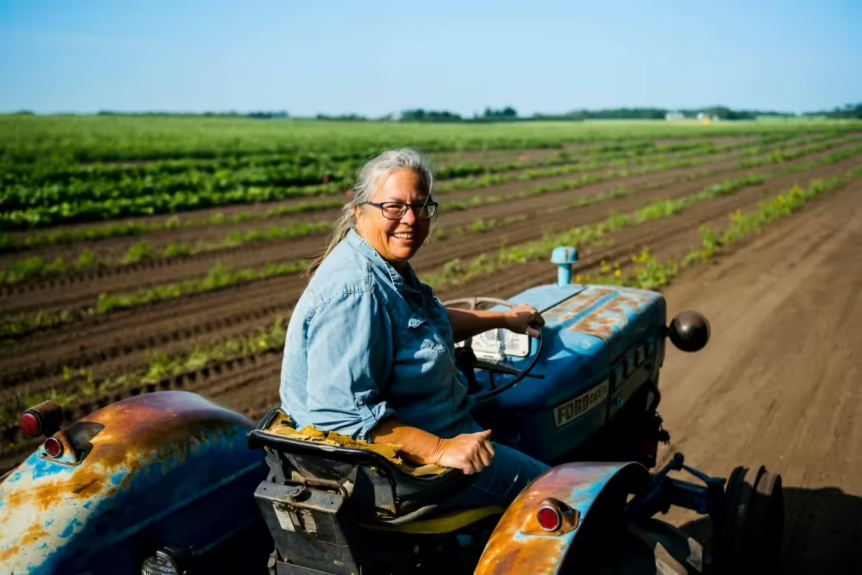
There’s a particular generosity in someone sharing not just what they’ve built, but why it matters. Tam Andersen did exactly that. As the owner of Prairie Gardens and president of Agritourism Alberta, she brought decades of farming experience, storytelling, and conviction to the keynote stage.
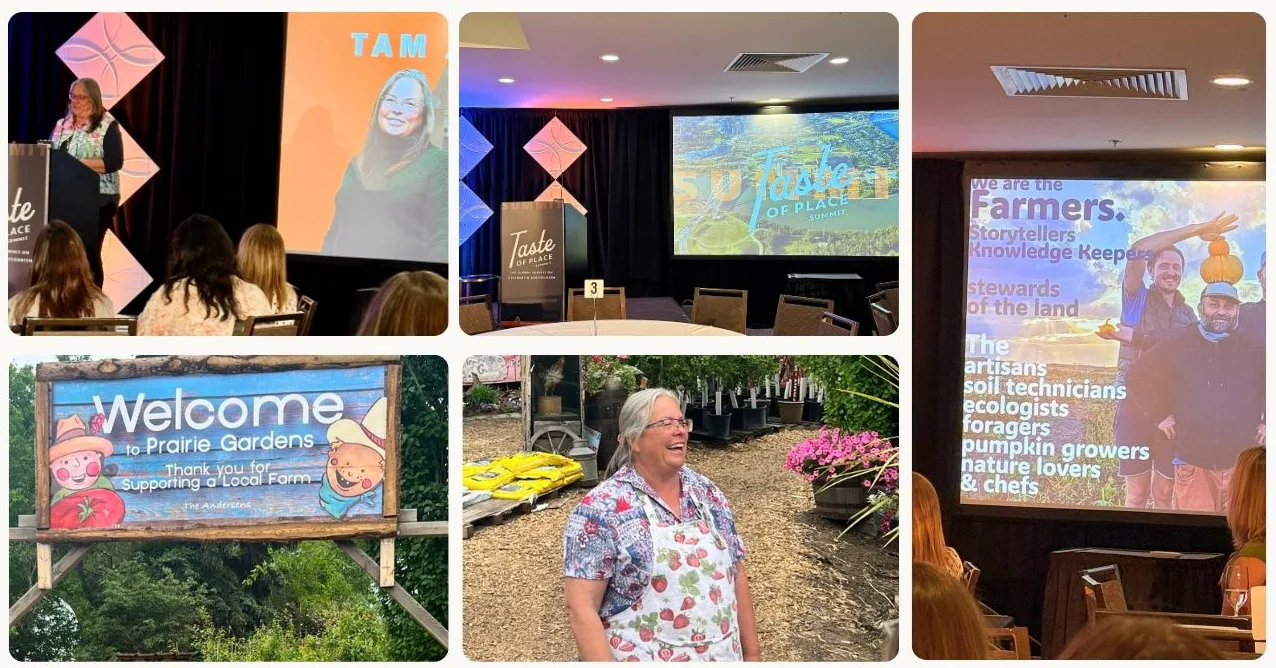
During her opening keynote, Andersen reflected on how many of us have come to think of potatoes in terms of only a few familiar varieties commonly available to consumers. Yet on their farm alone, they grow about 17 varieties. Through their Community Supported Agriculture (CSA) program, members are introduced to a rotating selection throughout the season, discovering colours, flavours, and textures that rarely make it into mainstream food retail.
I’m always astonished that the world settles for red, white, and russet potatoes.
The observation felt instantly relatable.
How much are we missing when most of our food experiences are shaped by convenience rather than curiosity?
What else exists beyond the familiar choices we’ve come to expect?
The real value of visiting a farm isn’t simply buying local food.
It’s discovering the diversity, flavours, and stories that have been there all along.
Taste Begins With the Land
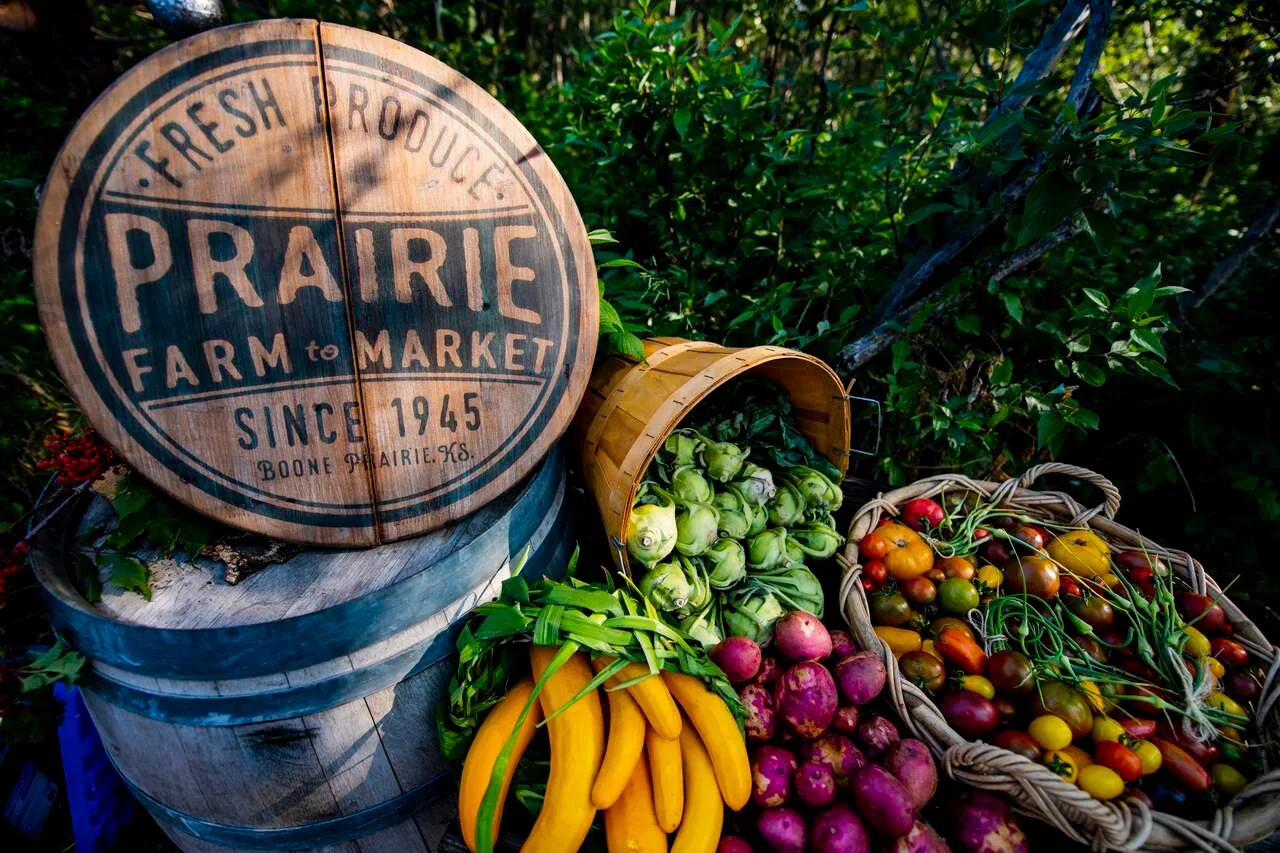
For those of us who didn’t grow up on farms, food can feel like something that materializes on a shelf. But farmers experience it differently. They understand that flavour is shaped by soil, seasons, weather, and place.
Tam spoke about visitors discovering what produce tastes like when it has travelled only a short distance from the field to their plate.
How often do we experience food at its freshest, closest to where it was grown?
Farm visits remind us that food is not just a product. It’s a living connection between people, land, weather, and time.
They offer opportunities to taste a strawberry picked at its peak, discover a vegetable you’ve never seen before, or learn why a farmer chooses to grow one variety over another.
And sometimes, they remind us that there is far more to food than convenience.
Taste of Place Is Really a Story of Place
“The land is actually the chef. And we are just the interpreters. Every ingredient tells a story.” — Tam Andersen
Another theme woven throughout the keynote was the idea that food tells stories.
Not just stories about recipes or ingredients, but stories about migration, culture, climate, and belonging.
In Alberta, those stories include Indigenous knowledge, Métis traditions, immigrant communities, and generations of farmers adapting to the realities of prairie life.
Food becomes a record of who came before us and what they carried with them.
Perogies. Saskatoon berries. Chokecherries. Sour cherries.
Family recipes and preservation techniques passed from one generation to the next.
These stories don’t just live in history books. They live in farms, kitchens, markets, and community tables.
Taste of place isn’t simply about eating local food. It’s the idea that flavour is shaped by geography, climate, soil, culture, and the people who steward the land.
As Tam reflected, “Taste is how we remember who we are and where we came from.”
Why Agritourism Matters
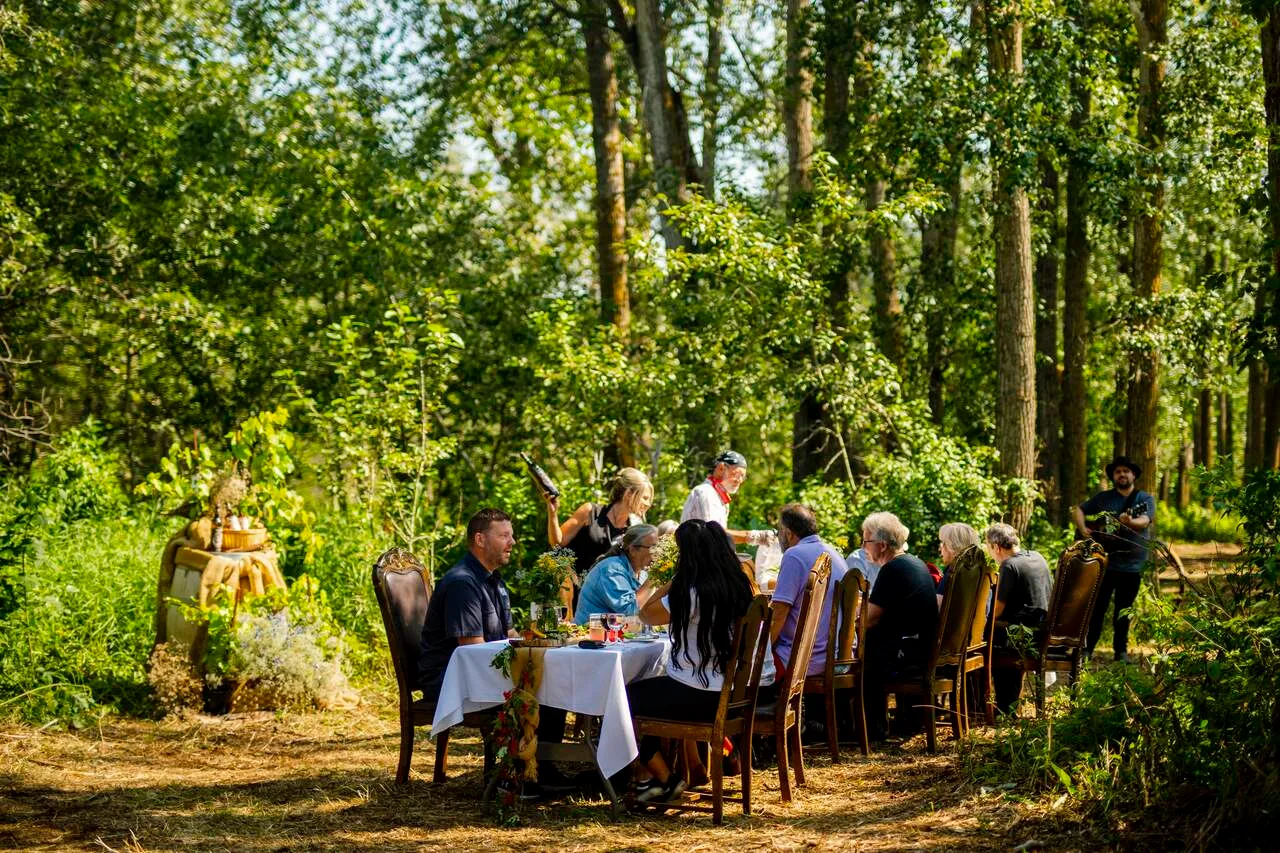
These stories and flavours don’t preserve themselves. They depend on farms remaining active, viable, and connected to their communities. That’s one reason agritourism has become such an important part of many farm businesses today.
Farming has always involved uncertainty. Weather, markets, supply chains, regulations, and global events can all affect a farm’s future.
Inviting people onto farms creates another pathway forward.
“It is a way for us to diversify our income, to future-proof our farms from all things beyond our control.” — Tam Andersen
For visitors, the value runs deeper than entertainment.
You leave with a better understanding of food. You meet the people behind it.
You gain a deeper appreciation for the work, risk, and care involved in growing it.
The next time you’re planning a weekend outing, consider taking a detour.
Visit a farm. Ask questions.
Taste something you’ve never tasted before.
Try a potato variety you’ve never seen.
Because there is far more flavour, story, and connection waiting to be discovered than you realize.