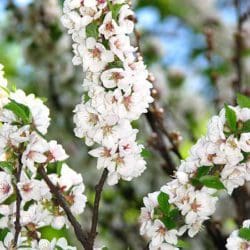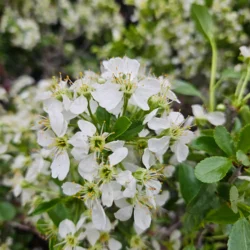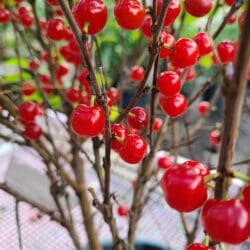
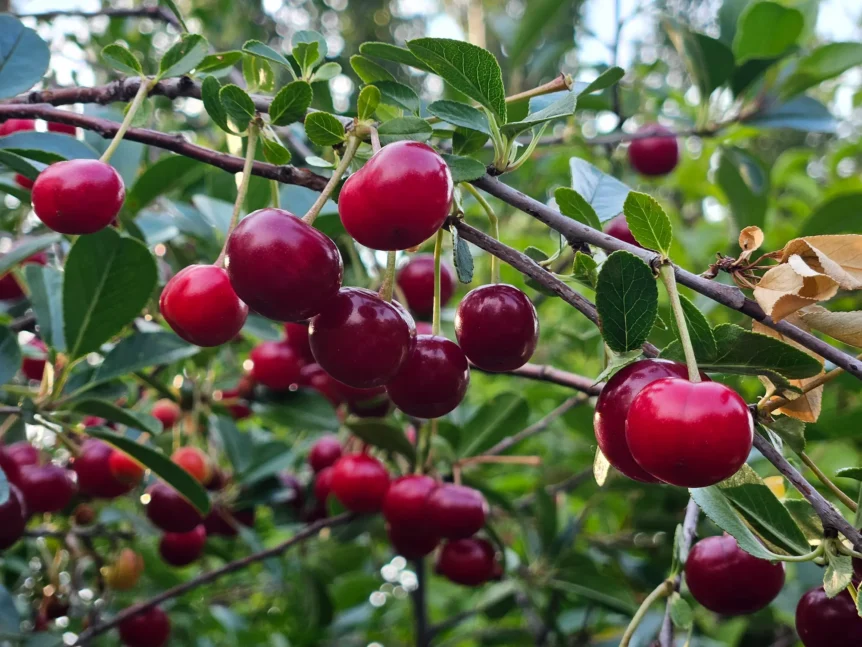
I wrote an article for a Horticultural publication in 1990 on the “Evans Cherry” for Prairie Canada. The write-up was “Cherries for the Prairies”. It initiated a deluge of sour cherry growing in all three Prairie provinces as well as in the colder parts of Canada and the northern states.
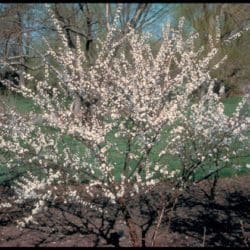
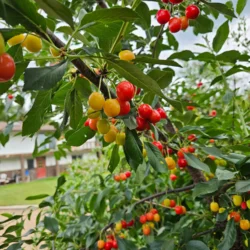
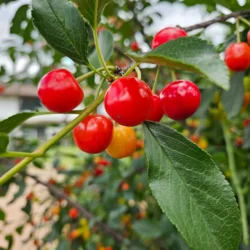
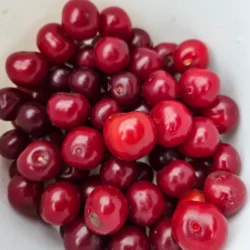
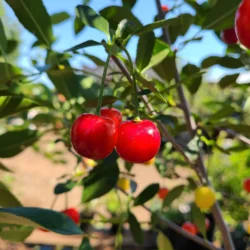
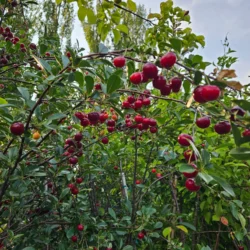
The story began in 1976 when I was asked by a friend in Sherwood Park, just east of Edmonton to check out a cherry bush in late July. I said that this cherry bush with its fruit did not resemble neither of the Minnesota cherries, such as Meteor or North Star, that I had tried to grow in Edmonton both common American cold hardy sour cherries. He got the cherry seedling as a root sucker from a friend a few miles away in Sherwood Park. He took me to see this mature cherry tree. I was amazed by this “Cherry Tree”that was about 10 feet (three meters) tall and 10 feet (3 meters) in diameter. I couldn’t believe my eyes. The tree was absolutely laden with 200 or 250 pounds (Over 100kg) of huge semi sweet cherries.
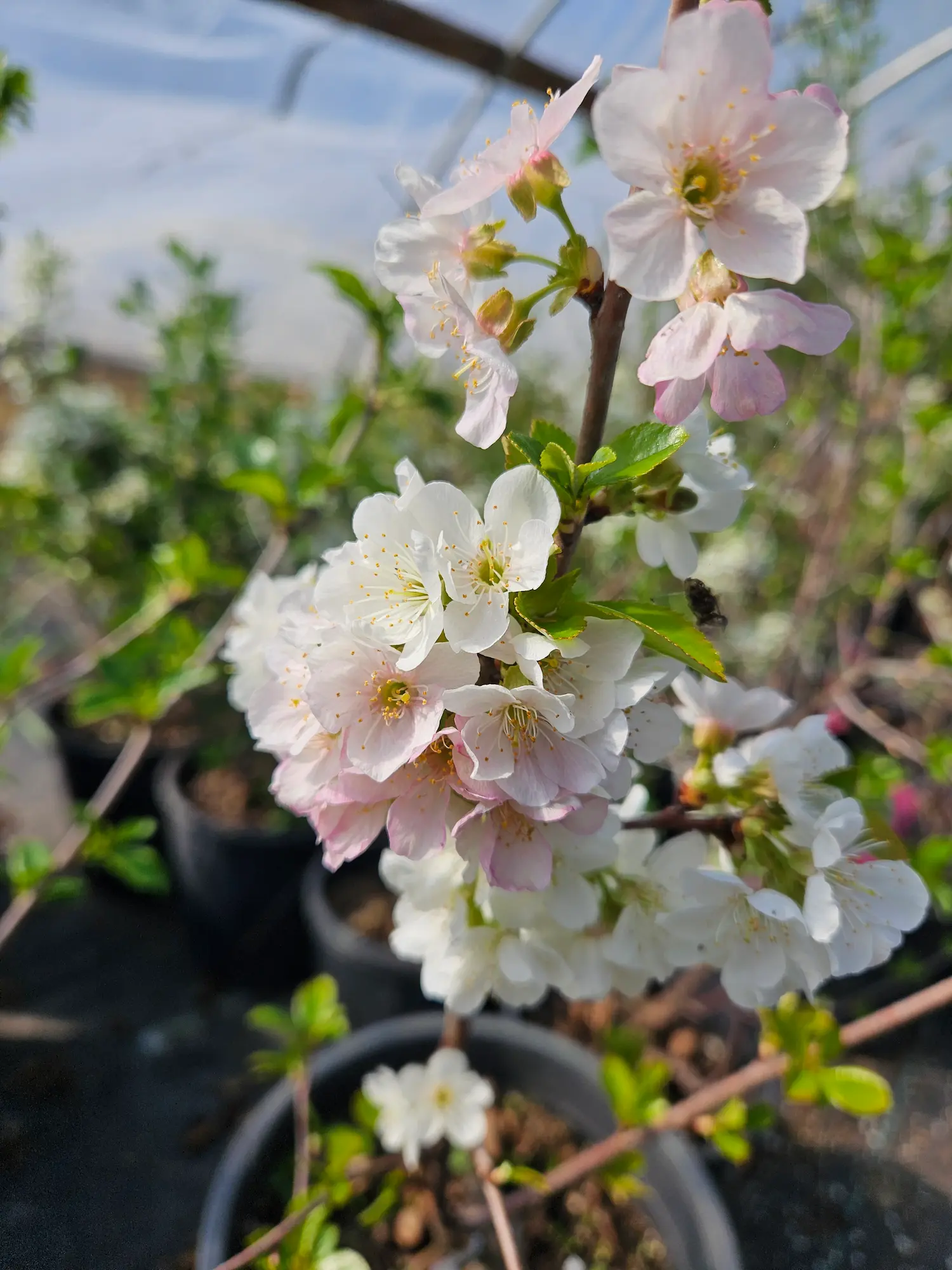
Where did this “Cherry Tree” come from? It came from a cherry orchard at Horse Hill, Alberta, a hamlet between Edmonton and Fort Saskatchewan. I visited this orchard the next day and it had dozens of cherry trees, owned by Mrs. Bogward, an elderly lady. I asked her about the cherry trees and she said that the original tree came from a single seedling that federal agriculturalists had given to her parents in 1923. Mrs. Bogward showed me the original tree which was barely alive. She told me that if I wanted seedlings, I could dig up all the many cherry tree suckers in her orchard before the coming winter. Mrs. Bogward told me all her land including the orchard had been sold to the Federal Government as a site for a jail facility. I dug up some 20 suckers in October of 1976 along with a few extra for my friends. I planted a few in my garden and the remainder in a very large garden at a Tofield farm in Alberta. I moved house in 1981 in Edmonton and I promptly dug up 15 established seedlings from the Tofield site and planted them on the perimeter of my new corner lot garden at Edmonton. By 1985 the cherry trees were some 6 – 8 feet tall and in successive years absolutely annually loaded with cherries. Over the next 10 years every “Italian and Ukrainian” gardener visited my cherry yard and all ended up with rooted suckers. I also gave away dozens and dozens of suckers to all of my agricultural colleagues and rugby playing associates. In the meantime, a Dr. Kris Pruski at Alberta Agriculture, a plant tissue horticulturalist tissue cultured this cherry and named it the “Evans” cherry.
More articles on berries and cherries in the prairies
DNA gardens at Elnora, Alberta propagated these cherries via tissue culture in the hundreds of thousands in the early 1990ies and sold them to T and T Nurseries in Winnipeg. The T and T nursery sold them in Canada from coast to coast and into the United States. In the United States this cherry was initially called the Bali cherry. Now it’s named the Evans Bali since it originally didn’t have a name when I first gave some suckers away.
Where did this cherry come from? On a trip some 25 years ago to Skagway, Alaska I found that they had a cherry festival at nearby Haines City. Cherries, I found, grew wild in profusion along the Alaska coast. In the 1920s,the Alaskan government customarily gave cherry seedlings to would be settlers. I believe that Agriculture Canada personnel working in the nearby Yukon border likely took some of these cherry seedlings back to Edmonton Alberta.
The original cherry stock likely came from Siberia from Alaska’s Russian settlers. None of the many cherries that I have since grown from seed have been very productive, unlike the original sucker stock. There are now millions of Evans cherry trees in both Canada and the United States and “Pick Your Own Cherry Orchards”with these trees are now scattered across the Prairies.
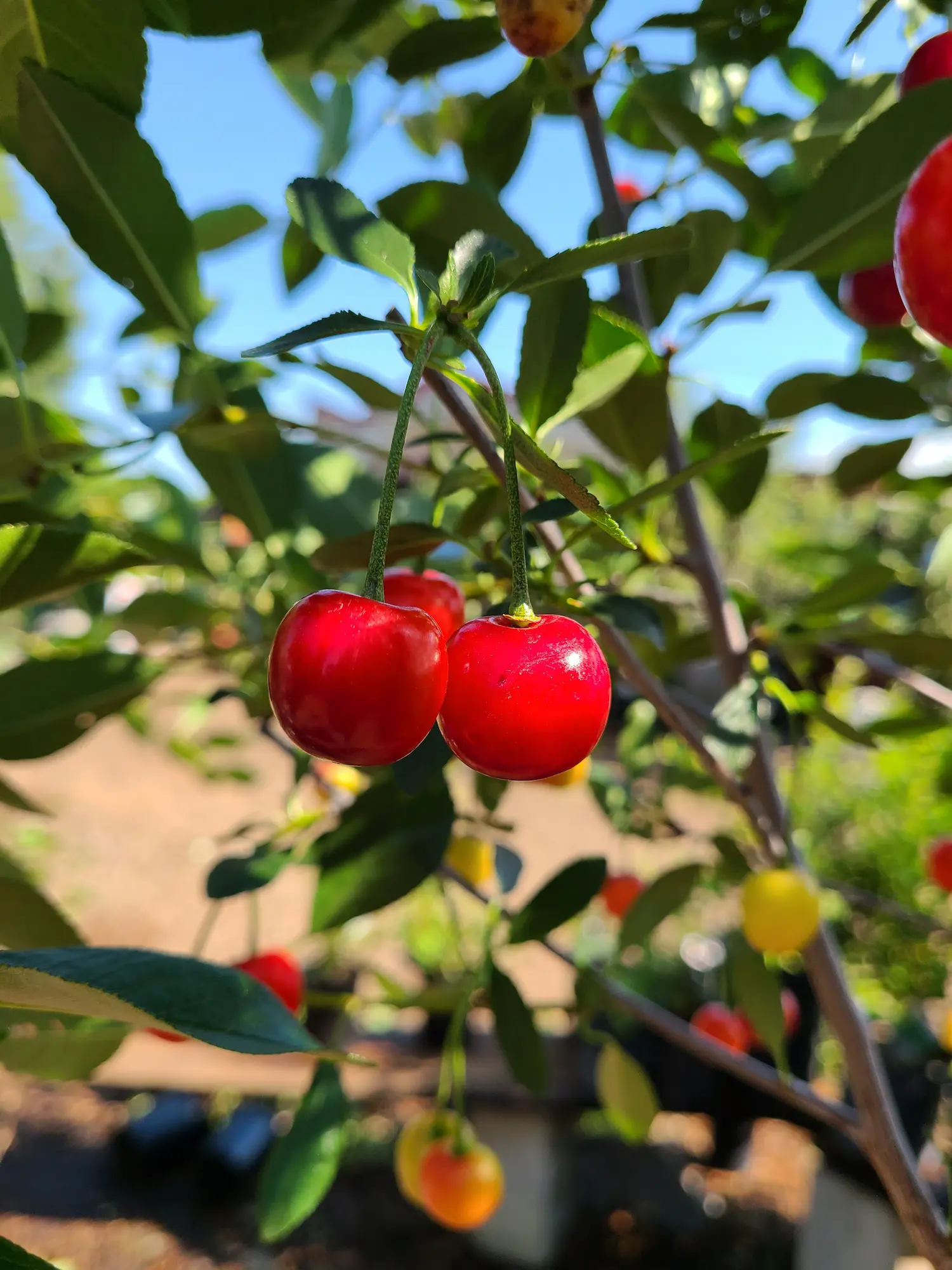
Evans cherry tree
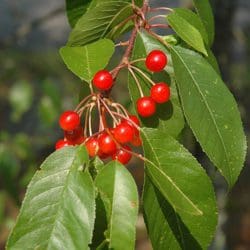
The biggest yield that I got off an Evans cherry, an 8-year-old bush, was 450 pounds (200 kgs) recorded by the CBC, French television network back in the mid-1990s. The average conventional US “Sour Cherry Tree”in Michigan and Wisconsin yields about 50 pounds per tree or just over 20kg. Many individuals like the Evans Sour Cherries when they sweeten up in August and September and prefer them over the B.C. sweet cherries. An interesting fact to emerge from this is that the yield of the Evans cherry, from an agricultural perspective, demonstrates vividly that “yield potential” of any crop or commodity can be most significantly advanced.
The Canadian Prairie Cherry Production
Subsequent to the introduction of the Evans cherry to the Canadian market the University of Saskatchewan finally released its now famous series of dwarf cherry trees. This program had begun at the University of Saskatchewan in the 1940s by a Dr Kerr and followed up by Rick Sawatsky until recent times. The first of around 10 or more of these “Romance” cherries, as they were called, was released in 1999 by Dr Bors, a horticulturalist at the University.
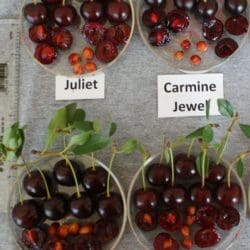
The first of these excellent cold tolerant University of Saskatchewan bred cherries to be sold across Canada was Carmine Jewel in 1999. It is still the hardiest and most productive of the Tart Cherries, out producing the others in the series 4 to 1. The cherries are smaller and not as sweet. In 2004 the University released the Romance series of cherries. They were hybrids of Mongolian cherries and Northern European varieties. They were called Cupid (largest cherry), Juliet (most popular), Crimson Passion (sweetest one) Romeo (tastes the most like a Bing BC cherry) and Valentine (most like a sour cherry and best for drying, as it keeps its red colour). All four are hardy, productive cherry cultivars. Subsequent to the release of the Romance cherries the University has released many more dwarf cherries, such as D’Artagnan, Athos, Porthos, Aramis, sweet Thing and Big Red. all of which are prairie hardy in Canada.
As a consequence, the Canadian Prairies can now be said to be pretty well self-sufficient in sour cherry production a concept once thought to be impossible for jams, pies and wines producing an estimated 80 to 100 tons annually.
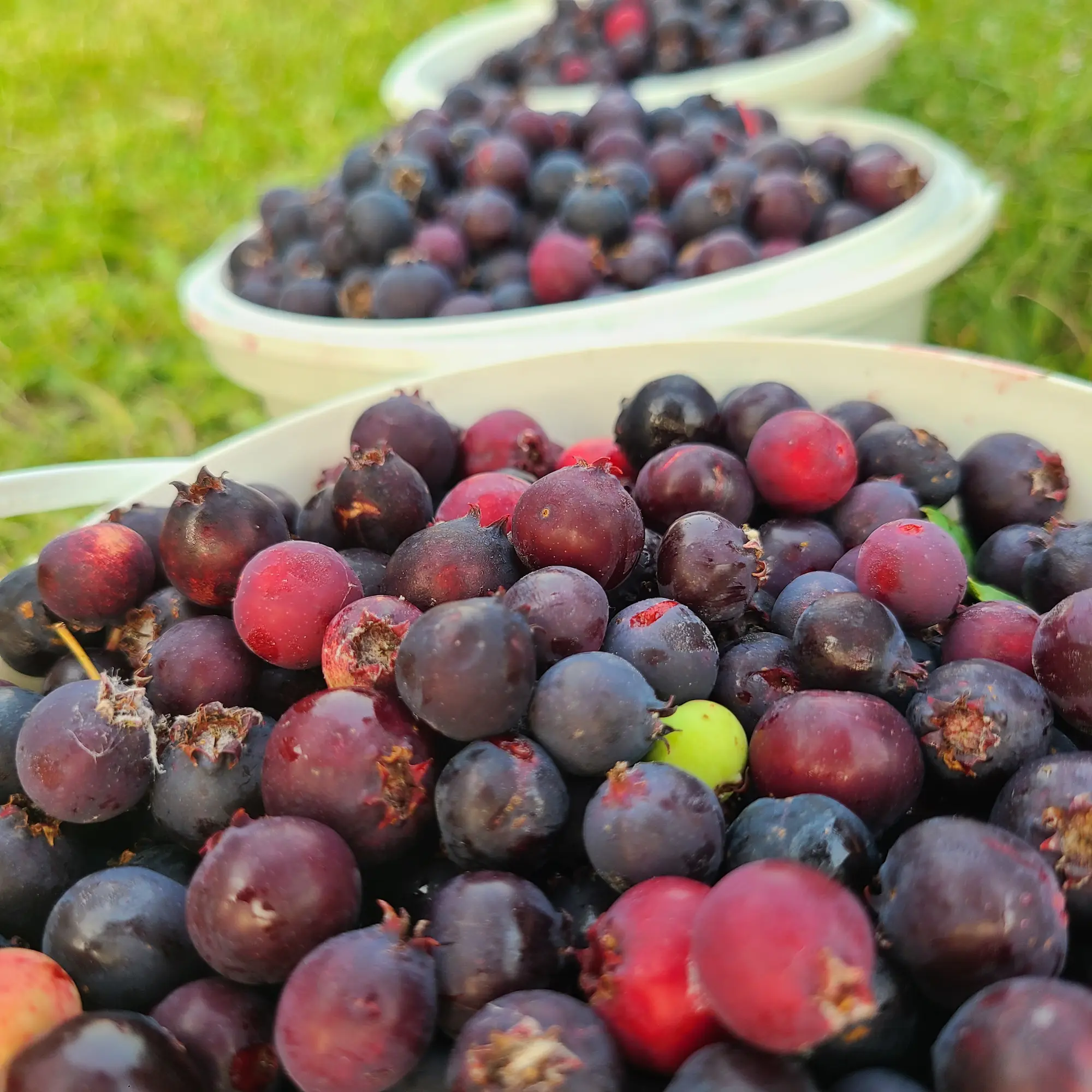
Saskatoon Buckets at Prairie Gardens
In addition to cherries the Prairie provinces (not including British Columbia) grow a remarkable range of small berry fruit crops from saskatoons choke cherries, red and black currants, haskaps (honey berries), strawberries, raspberries, rhubarb and even grapes. These crops are often grown as horticultural farm operations or exclusively on many if not all Hutterite colonies. To reform your prairie fruit growing memory just attend a couple of farmers markets in the summer and fall months and see what we can grow. Fruit growing in prairie Canada is not wishful thinking but a factual and a very healthful reality.
Order Your Cherry Trees Today!
-

Meteor Sour Cherry
$75.00 Add to cart -
Sweet Thing Sour Cherry
Price range: $24.95 through $44.95 Select options This product has multiple variants. The options may be chosen on the product page -
Black Nanking Cherry
$36.95 Add to cart -
Cutie Pie Sour Cherry
$39.95 Add to cart -
d’ Artangnan Cherry
Price range: $24.95 through $155.00 Select options This product has multiple variants. The options may be chosen on the product page -
Nanking Cherry
Price range: $24.95 through $59.95 Select options This product has multiple variants. The options may be chosen on the product page -
Valentine Cherry
Price range: $39.95 through $99.00 Select options This product has multiple variants. The options may be chosen on the product page -
Romeo Cherry
Price range: $24.95 through $195.00 Select options This product has multiple variants. The options may be chosen on the product page -
Juliet Cherry
Price range: $24.95 through $245.00 Select options This product has multiple variants. The options may be chosen on the product page -
Pincherry (Native)
$185.00 Read more